Endocrine Surgery · Paris

Thyroid and parathyroid
surgery in Paris

Specialised surgical management of thyroid and parathyroid conditions.

Dr Gaël Guian is an endocrine surgeon exclusively specialised in thyroid and parathyroid conditions in Paris. He manages the full range of surgical indications — thyroid nodules, goitre, hyperthyroidism, thyroid cancer, primary hyperparathyroidism and parathyroid adenoma — performing a high annual volume of procedures. Accredited by the French Health Authority (HAS), he routinely uses intraoperative nerve monitoring (NIM) to protect the recurrent laryngeal nerves and the Fluobeam LX (autofluorescence) to identify the parathyroid glands during every thyroid procedure. Consultations take place in Paris 16th; surgery is performed at Hôpital Privé des Peupliers (Paris 13th), a Ramsay Santé group facility with a dedicated Cancer Institute.
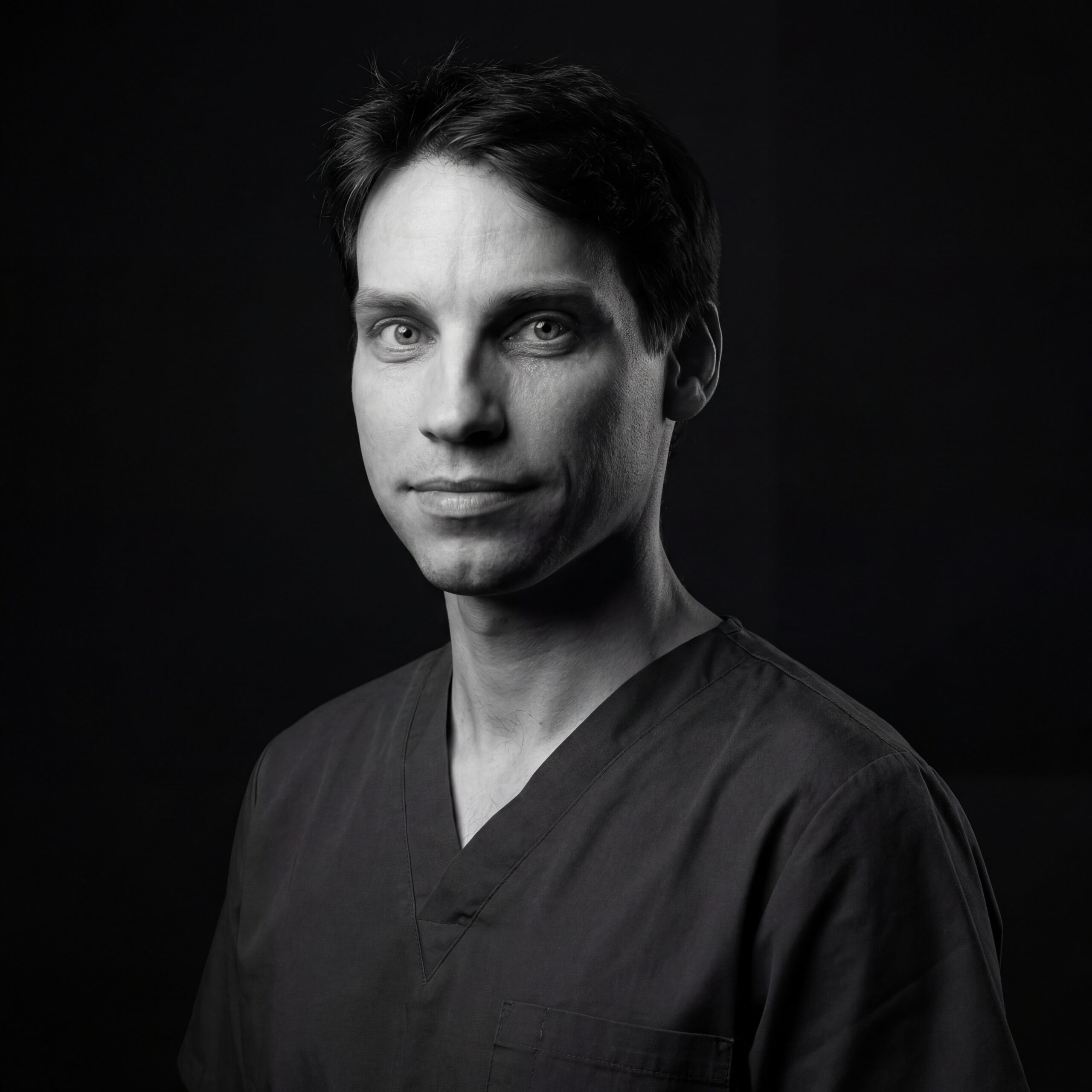
Dr Gaël Guian, endocrine surgeon
HAS Accredited
Intraoperative nerve monitoring (NIM)
Fluobeam LX — Autofluorescence
Hôpital des Peupliers, Paris 13th
French health insurance accepted
Surgical specialities

Procedures performed by a specialist endocrine surgeon in Paris.

Thyroid surgery in Paris

Thyroid surgery (total thyroidectomy or lobectomy) is indicated for suspicious nodules, compressive goitre, medically resistant hyperthyroidism and thyroid cancers. Dr Gaël Guian assesses each indication against SFE 2022 guidelines and ATA 2025 recommendations. During every procedure he uses intraoperative nerve monitoring (NIM) to track the recurrent laryngeal nerves in real time, and the Fluobeam LX to preserve the parathyroid glands and reduce the risk of postoperative hypocalcaemia. Surgery is performed at Hôpital Privé des Peupliers (Paris 13th), most often as day surgery.

Procedure

Thyroidectomy may be total or partial (lobectomy), depending on the pathology and preoperative findings. The procedure lasts on average 1 to 2 hours under general anaesthesia; same-day discharge is possible for partial thyroid removal.

Surgical techniques

Dr Guian routinely uses NIM and Fluobeam LX in all thyroidectomies, in line with current international guidelines, to minimise risks to the voice and the parathyroid glands.

Postoperative follow-up

A personalised follow-up plan is put in place after surgery: hormone replacement adjustment if required, calcium monitoring and a review appointment at 3 weeks.

Learn more about thyroid surgery →

Parathyroid surgery in Paris

Parathyroid surgery (parathyroidectomy) is the only curative treatment for primary hyperparathyroidism, a condition caused in 85% of cases by a single parathyroid adenoma. Dr Gaël Guian performs the procedure using the Fluobeam LX (near-infrared autofluorescence) to visualise healthy glands in real time, and confirms cure intraoperatively via PTH assay. This dual safety approach — autofluorescence + intraoperative PTH — achieves a cure rate exceeding 95% at first intervention.

Preoperative workup

Before any parathyroid surgery, a full workup is carried out to localise the responsible gland(s): blood tests (PTH, calcium), cervical ultrasound, parathyroid scintigraphy (MIBI) or choline PET-scan where needed.

Procedure

Parathyroidectomy is performed under general anaesthesia through a small cervical incision. Dr Guian uses the Fluobeam LX and intraoperative PTH assay to confirm cure before wound closure.

Postoperative course

In the vast majority of cases, blood calcium normalises within the first few postoperative days. A blood test review is scheduled at 3 weeks to monitor parathyroid recovery and calcium-phosphate balance.

Learn more about parathyroid surgery →
Intraoperative technologies

Intraoperative monitoring techniques

Accredited by the HAS, Dr Guian routinely uses intraoperative nerve monitoring (NIM) to protect the recurrent laryngeal nerves and the Fluobeam LX to identify the parathyroid glands during every thyroid procedure.

Intraoperative nerve monitoring

NIM — Recurrent nerve protection

NIM monitors the integrity of the recurrent laryngeal nerves, which control vocal cord movement. It alerts the surgeon to excessive traction before any injury can occur. In line with SFE-AFCE-SFMN 2022 guidelines.

Near-infrared autofluorescence

Fluobeam LX — Fluoptics®

Identifies parathyroid glands without contrast injection. During thyroidectomies, helps preserve them to prevent hypocalcaemia. During parathyroidectomies, visualises the diseased gland and confirms preservation of healthy glands.

Care pathway

How your care is organised

1

Specialist consultation with Dr Gaël Guian

Review of your investigations (ultrasound, fine-needle biopsy, hormone panel) and assessment of the surgical indication. All your questions answered before any treatment decision.

2

Surgery at Hôpital des Peupliers (Paris 13th)

Thyroidectomy or parathyroidectomy performed with intraoperative NIM and Fluobeam LX. Duration: 1 to 2 hours depending on the procedure.

3

Recovery and personalised follow-up

Same-day discharge possible (day surgery). Review appointment at 3 weeks, then ongoing blood tests and hormone monitoring tailored to your situation.

Consultation

Endocrine surgery consultation in Paris

Dr Gaël Guian consults in Paris for the assessment and management of thyroid and parathyroid conditions. Consultations allow a thorough review of your investigations (ultrasound, fine-needle biopsy, hormone panel) and discussion of surgical options.

Endocrine surgery consultations in Paris 16th, near Trocadéro. French health insurance accepted — Fast appointment scheduling via Doctolib.

"From the first consultation to the follow-up, every step was explained clearly."

"Dr Guian is an excellent surgeon who reassured me before the operation — everything went very smoothly. I highly recommend him."

Patient — Google Reviews
Frequently asked questions

Your most frequently asked questions about endocrine surgery

How long does recovery take after surgery?

Recovery time depends on the type of procedure. After a lobectomy (partial thyroid removal), same-day discharge is possible and most patients return to light activities within 7 to 10 days. After a total thyroidectomy, one night in hospital is usual, with a return to work after approximately 2 weeks. Strenuous physical activity is generally discouraged for 4 to 6 weeks. After a parathyroidectomy, the procedure is performed as day surgery and most patients resume normal activities within 1 to 2 weeks.

How do I prepare for surgery?

Before surgery, you will need to complete a mandatory preanaesthetic consultation with the anaesthesia team at Hôpital Privé des Peupliers (tel: 01 44 16 52 01). You will also receive a consent form and a surgical quotation to sign electronically via YouSign. Specific instructions regarding medications to stop or continue, fasting requirements and hygiene protocols will be given at the preoperative consultation. A detailed patient information booklet is provided at the time of the surgical decision.

Will I need hormone treatment after the operation?

After a total thyroidectomy, lifelong levothyroxine (thyroid hormone) replacement is always required. After a lobectomy, the remaining lobe usually produces enough hormone — treatment is only prescribed if the TSH level is above normal at the 6-week check, which occurs in approximately 30% of cases. After a parathyroidectomy, temporary calcium and vitamin D supplementation is often prescribed for a few weeks while the remaining parathyroid glands resume normal function.

How large is the scar after a thyroidectomy?

The incision is placed in a natural skin crease at the base of the neck and typically measures between 3 and 6 cm, depending on the extent of surgery. It is closed with absorbable sutures and surgical glue — no visible stitches or traditional dressing. Showering is possible the day after surgery. After 15 days, a moisturising cream and gentle massage are recommended. With proper sun protection (SPF 50 for at least one year) and scar massage, the scar becomes fine and barely visible at 6 to 12 months for the vast majority of patients.

Can hyperparathyroidism be treated without surgery?

Surgery is the only curative treatment for primary hyperparathyroidism. In selected cases — older patients, surgical contraindication or patient preference — active surveillance or medical treatment (cinacalcet, bisphosphonates) may be proposed. These treatments control the effects of the disease but do not cure it. The decision is always made on a case-by-case basis, taking into account calcium levels, bone density, kidney function and symptoms.

Can I return to normal life after surgery?

Yes — the vast majority of patients return fully to normal life within 2 to 3 weeks. You may walk from the evening of surgery and resume driving after 7 days. Air travel is also possible after 7 days. Professional and sports activities typically resume after 3 weeks. For patients requiring levothyroxine after total thyroidectomy, once the dose is stabilised, a simple annual blood test is all that is needed.

When should a thyroid nodule be operated on?

Not all thyroid nodules require surgery. The main indications are: suspicious or malignant cytology (Bethesda IV, V or VI on fine-needle biopsy), a compressive goitre causing difficulty swallowing or breathing, hyperthyroidism (toxic nodule or Graves' disease) unresponsive to medical treatment, or a rapidly growing nodule. Dr Guian assesses each case individually based on ultrasound (EU-TIRADS classification), cytology results (Bethesda score) and clinical findings, in line with SFE 2022 and ATA 2025 guidelines.

What are the risks to the voice after thyroid surgery?

The main risk is injury to the recurrent laryngeal nerve, which controls vocal cord movement. In specialist centres using routine intraoperative nerve monitoring (NIM), the risk of permanent vocal cord paralysis is below 1%. Temporary hoarseness in the first weeks after surgery is more common and resolves spontaneously in the vast majority of cases. Dr Guian uses NIM monitoring during every thyroid procedure, in line with SFE-AFCE-SFMN 2022 recommendations.

The surgeon

Dr. Gaël Guian — Endocrine Surgeon

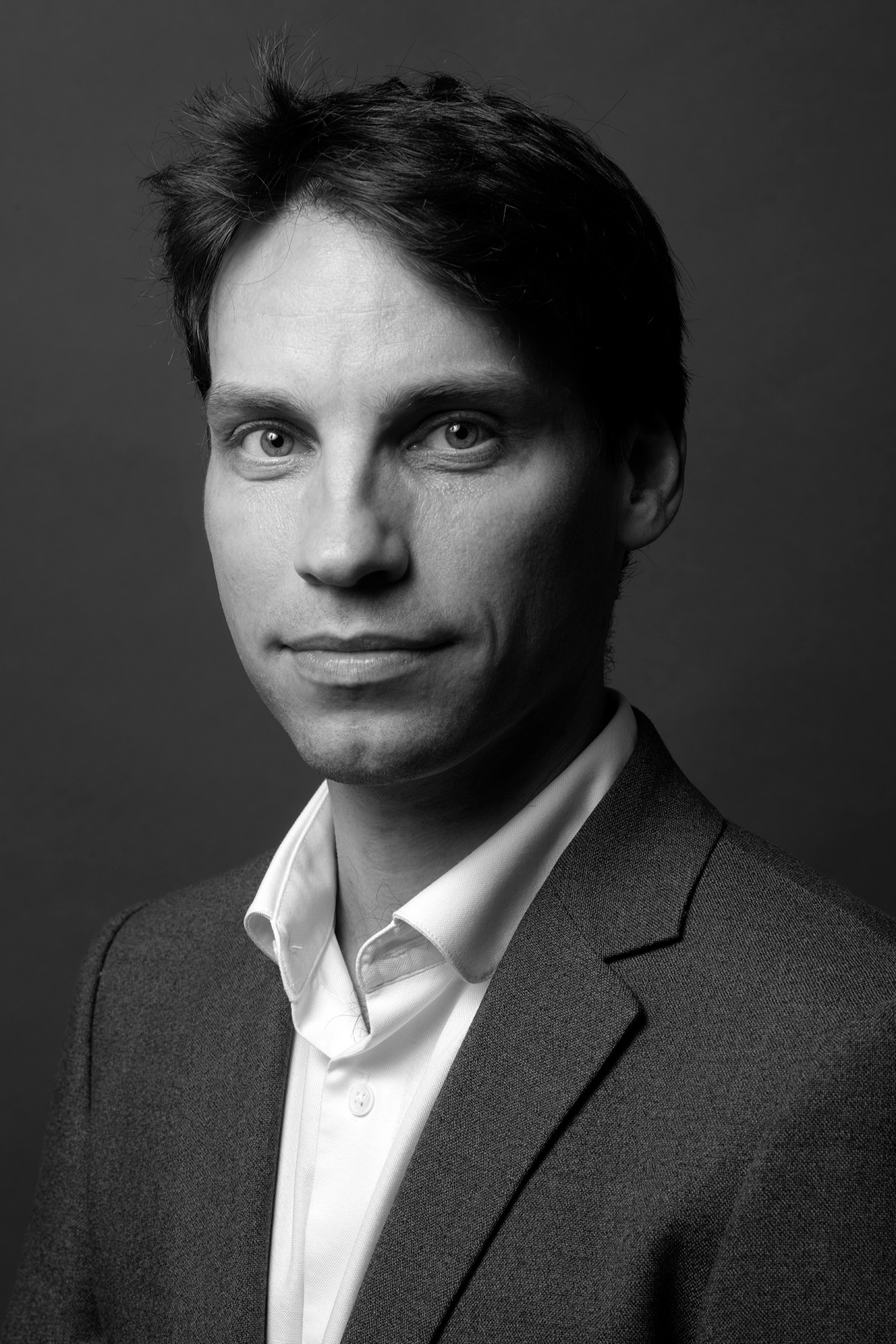
Dr Gaël Guian, endocrine surgeon

Dr Gaël Guian
Endocrine surgeon

Dr Gaël Guian is a surgeon specialised in thyroid and parathyroid surgery in Paris. A former Senior Registrar at Paris Public Hospitals (AP-HP), he deepened his expertise in thyroid surgery over four years of post-fellowship training, including at the endocrine surgery unit of Prof. Fabrice Menegaux at Pitié-Salpêtrière Hospital — one of the leading reference centres for thyroid and parathyroid surgery in France.

Holder of the Inter-University Diploma (D.I.U.) in endocrine surgery, Dr Guian has specialist expertise in the surgical management of thyroid and parathyroid conditions. He treats patients with thyroid nodules, goitre, hyperthyroidism (Graves' disease or toxic nodule), thyroid cancer, as well as parathyroid disorders including primary hyperparathyroidism and parathyroid adenoma.

In his daily practice, Dr Guian uses intraoperative NIM in all thyroid procedures to preserve vocal function, and the Fluobeam LX (near-infrared autofluorescence) to protect the parathyroid glands and reduce the risk of postoperative hypocalcaemia. He consults and operates at Hôpital Privé des Peupliers in Paris (13th arrondissement), a Ramsay Santé group facility with state-of-the-art equipment and a dedicated Cancer Institute.

✓ French Health Authority (HAS) Accredited

Learn more about Dr Gaël Guian →

Book an appointment online

Dr Gaël Guian sees patients in Paris 16th (near Trocadéro / Victor Hugo metro) for surgical assessment of thyroid and parathyroid conditions. The consultation includes a review of your preoperative investigations (cervical ultrasound, fine-needle biopsy, hormone panel, scintigraphy), confirmation of the surgical indication and a detailed explanation of the procedure.

French health insurance accepted · Typical waiting time < 2 weeks

Book an appointment on Doctolib 01 45 02 18 18